The Role of the Gulf States in Africa’s Development Over the Next Decade
November 30 2025•reshdxmb_admin
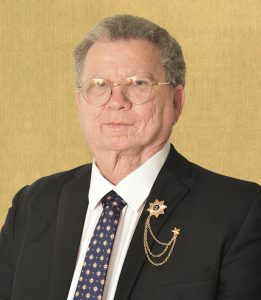
News Feature with Samuel Shay, Entrepreneur and Senior Economic Advisor to the Abraham Accords Treaty, and CEO of Gulf Technologies Systems (GTS)
A dramatic shift is unfolding in the relationship between Africa and the Gulf states. What was once a landscape dominated by scattered aid projects is becoming a strategic partnership aimed at long term development. In an exclusive interview, Samuel Shay outlines how Saudi Arabia, the UAE and Qatar are redefining their engagement with Africa, not as donors but as co architects of the continent’s next economic era.
A New Strategic Vision: Partnership, Not Patronage
Shay explains that old aid models created dependency rather than progress. The Gulf states, influenced by the Abraham Accords and the IMEC initiative, are now adopting a new approach rooted in mutual benefit and shared prosperity. “This is no longer about sending money,” he says. “It is about building African capacity to stand independently.”
Their investments focus on infrastructure, energy, education and technology, forming a clear geopolitical strategy: link Gulf financial and technological strength with Africa’s human resources and vast natural potential.
Energy and Infrastructure: The Foundation of Development
Gulf nations are accelerating Africa’s shift to renewable energy. Shay highlights ambitious projects in solar power, hydrogen and desalination already underway in East and North Africa. These initiatives are designed to empower local engineers and technicians to operate and maintain advanced systems.
“This is long term nation building,” Shay explains. “The Gulf states want to help Africa generate its own electricity, manage its own grids and sustain its own industries.”
Agriculture and Food Security: A Natural Partnership
Africa possesses most of the world’s unused arable land, while the Gulf faces growing food security challenges. Shay describes how this complementarity forms the basis for large scale agricultural partnerships. Gulf investments are funding modern irrigation systems, vertical farms and Agrotech platforms across the continent.
According to him, the model is straightforward: food security for the Gulf, and modernized agricultural infrastructure for Africa.
Education and Human Capital: The Most Transformative Investment
Shay emphasizes that the most profound Gulf investment is occurring in education. “They are not building schools,” he notes. “They are building a new generation.” The Gulf states aim to reshape civic values by promoting trust, accountability, entrepreneurship and professional ethics.
Educational programs focus on digital literacy, financial skills, governance, and leadership development. For Shay, this is the cornerstone of Africa’s future stability. “When you change the mindset, you change the continent.”
Healthcare and Social Infrastructure
The pandemic exposed deep weaknesses in African healthcare systems. Shay outlines how Gulf nations are now financing advanced hospitals, pharmaceutical facilities and telemedicine networks. These innovations bring quality healthcare to rural areas and reduce dependency on foreign medical missions.
Technology and Industrialization: Creating Value at Home
The Gulf’s strategic investments also target industrialization. Through free trade zones and joint ventures, they are helping African countries build manufacturing hubs that process raw materials domestically before export. Shay points to emerging industrial parks in Mombasa, Lagos and Dakar that are becoming anchors of future innovation and logistics.
Reform Within Africa: A Necessary Internal Shift
Shay stresses that the success of these partnerships depends on Africa’s own reforms. “The Gulf can bring technology and capital,” he says, “but Africa must bring governance.” He explains that transparency, legal stability and the elimination of systemic corruption are essential if development is to take root.
African leaders must strengthen institutions, enforce contracts and modernize their public education systems to produce skilled professionals capable of managing large scale industries.
Building a Shared Future
Shay frames the partnership between Africa and the Gulf not as charity but as a strategic alliance that links the Middle East, Africa and South Asia into a unified economic sphere. Projects in energy, trade and education will create a shared foundation for long term stability and prosperity.
“The next decade can become a renaissance in Afro Gulf relations,” he says. “If both sides commit to integrity and development, this partnership can reshape the global economic balance.”
Conclusion: The Decade of Partnership and Empowerment
According to Shay, the coming years will determine whether Africa remains a continent of potential or becomes a continent of achievement. The Gulf states are choosing to stand alongside Africa as strategic allies investing in energy, education, governance and technology.
“Africa’s independence will come through intelligent integration,” Shay concludes. “And the Gulf states are now among the most important partners in shaping that destiny.”


